Quantum Machine Learning – A Crystal Ball into the Future
Dr Ali Al Ataby
Chair, department of electrical engineering and electronics, American University of Ras Al Khaimah
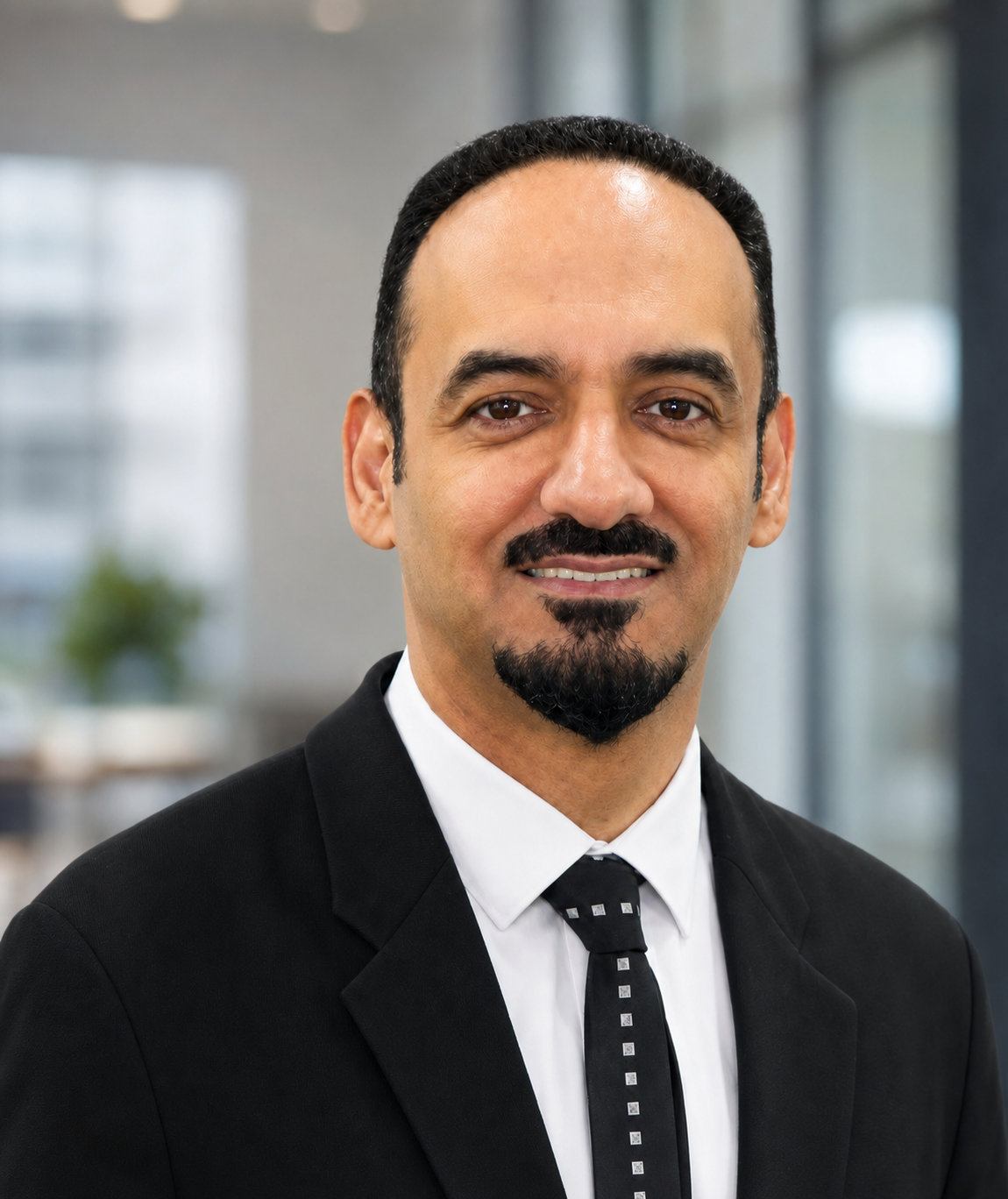
Dr Ali Al Ataby is Chair of the Department of Electrical and Electronics Engineering at the American University of Ras Al Khaimah (AURAK), UAE. He holds a Ph.D. in Electrical Engineering, with a focus on Signal Processing and Machine Learning, from the University of Liverpool, UK, where he also earned a Postgraduate Diploma in Higher Education in Teaching and Learning. With a career spanning academia and industry for nearly three decades across the UAE, the UK, and Iraq, he served at the University of Liverpool as Assistant Professor and then Associate Professor before joining AURAK in 2023. Dr Al-Ataby is a Chartered Engineer (CEng), a Senior Member of IEEE (SMIEEE), and a Senior Fellow of the UK Higher Education Academy – Advance HE (SFHEA). He is the founder and chair of the IEEE International Conference series on Electrical/Electronics, Robotics, Artificial Intelligence, and Informatics (ICERAI), and has served extensively on technical committees of many international conferences. His research spans signal and image processing, machine learning, deep learning, computer vision, robotics, IoT, and biomedical signal processing, with applications in non-destructive testing, driver fatigue prediction, visual augmentation for the visually impaired, and intelligent healthcare, alongside a sustained interest in technology-enhanced education. He has supervised numerous Ph.D. and M.Sc. theses and published widely in leading journals and conferences. His honours include the Sir Alastair Pilkington Award for Teaching Excellence and Innovation and the Faculty of Science and Engineering Learning and Teaching Award at the University of Liverpool.
Abstract
We stand at the frontier where two revolutions meet: quantum computing and artificial intelligence. Quantum Machine Learning (QML) is not merely about accelerating existing algorithms – it is about asking questions that have never been asked before and approaching problems that classical computation considers intractable. While classical AI has been devoted to teaching machines to think like humans, QML opens the door to systems that compute as the universe itself does: probabilistically, in superposition, and through entanglement.
This keynote bridges physics, data science, and engineering to make the foundational ideas of QML accessible to a broad engineering audience. It will introduce the essential concepts of quantum physics and quantum mechanics that underpin the field, including superposition, interference, entanglement, and the qubit as the fundamental unit of quantum information. From there, the talk will move to the architecture of quantum computation and the central question of how classical data is encoded into quantum states, comparing the principal encoding strategies and explaining why data encoding is widely regarded as the bottleneck of practical QML in the present Noisy Intermediate-Scale Quantum (NISQ) era.
Flagship QML models will be examined in depth. The keynote will also survey the current QML ecosystem, and outline emerging applications across drug discovery, finance, cybersecurity, energy systems, and sustainability. The session closes with a forward-looking reflection: ML and AI will be reshaped, and this is the future.
Energy Storage Beyond Lithium-Ion Batteries in the Era of Industry 4.0
Professor Amor M. Abdelkader, FRSC, FIMMM
Professor of Advanced Materials, Bournemouth University, UK
Director of Advanced Materials Research Centre, Université Côte d’Azur, France.
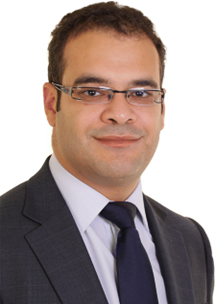
Professor Amor M. Abdelkader is an internationally recognised materials scientist whose research spans advanced materials, nanotechnology, energy storage, graphene and two-dimensional materials, self-healing systems, and sustainable manufacturing technologies. He is Professor of Advanced Materials at Bournemouth University, UK, Director of the Advanced Materials Research Centre, and Chair of Advanced Research at Université Côte d’Azur, France.
He obtained his PhD in Materials Science and Metallurgy from the University of Cambridge in 2011 under the supervision of Professor Derek J. Fray FRS. He subsequently conducted research on self-healing materials at Delft University of Technology before joining the University of Manchester and later the National Graphene Institute, where he worked alongside Professor Sir Kostya Novoselov, Nobel Laureate in Physics and co-discoverer of graphene. He later returned to the University of Cambridge, working with Professor Andrea C. Ferrari at the Cambridge Graphene Centre.
Prof. Abdelkader maintains active international collaborations and academic appointments with leading institutions worldwide, including the University of Cambridge, Delft University of Technology, North Eastern University, and City University of Hong Kong. His research has led to significant advances in energy storage technologies, graphene-enabled devices, materials recycling, electrochemical carbon dioxide sequestration, and sustainable materials processing.
He has authored more than 150 peer-reviewed publications, holds over 30 patents, and has contributed to several major international research initiatives. His work has attracted more than 9000 citations. He is a Fellow of the Royal Society of Chemistry (FRSC) and a Fellow of the Institute of Materials, Minerals and Mining (FIMMM).
Prof. Abdelkader is a sought-after keynote and plenary speaker whose interdisciplinary research bridges fundamental materials science and industrial innovation, with a particular focus on developing advanced materials solutions for the global energy and sustainability challenges of the future.
Abstract
The growing global demand for sustainable energy storage, coupled with concerns over the limited availability and uneven geographical distribution of lithium resources, has accelerated the search for next-generation battery technologies. Among the most promising alternatives are sodium-ion and potassium-ion batteries, which benefit from the abundance, low cost, and widespread availability of their constituent elements. In addition, these systems offer attractive electrochemical properties, including rapid ion transport and the potential for scalable, cost-effective deployment.
Despite these advantages, significant scientific and technological challenges remain. The larger ionic radii and distinct electrochemical behaviour of sodium and potassium ions introduce complex issues related to electrode stability, reaction kinetics, interfacial chemistry, and long-term cycling performance. Addressing these challenges requires the development of advanced electrode materials capable of accommodating large ion insertion and extraction while maintaining high capacity, structural integrity, and cycling durability.
In this talk, I will present our recent advances in designing and engineering novel nanostructured electrode materials for post-lithium energy storage systems. Particular emphasis will be placed on crystal engineering, morphology control, defect and interface design, reaction mechanisms, and scalable synthesis approaches. I will also discuss the integration of these materials into practical full-cell configurations and highlight emerging opportunities for developing high-performance, low-cost, and sustainable energy storage technologies beyond lithium-ion batteries.
Can AI shift the tide against antimicrobial resistance?
Professor Alaa Abouelfetouh
Faculty of Pharmacy, Alexandria University and Alamein International University, Egypt.
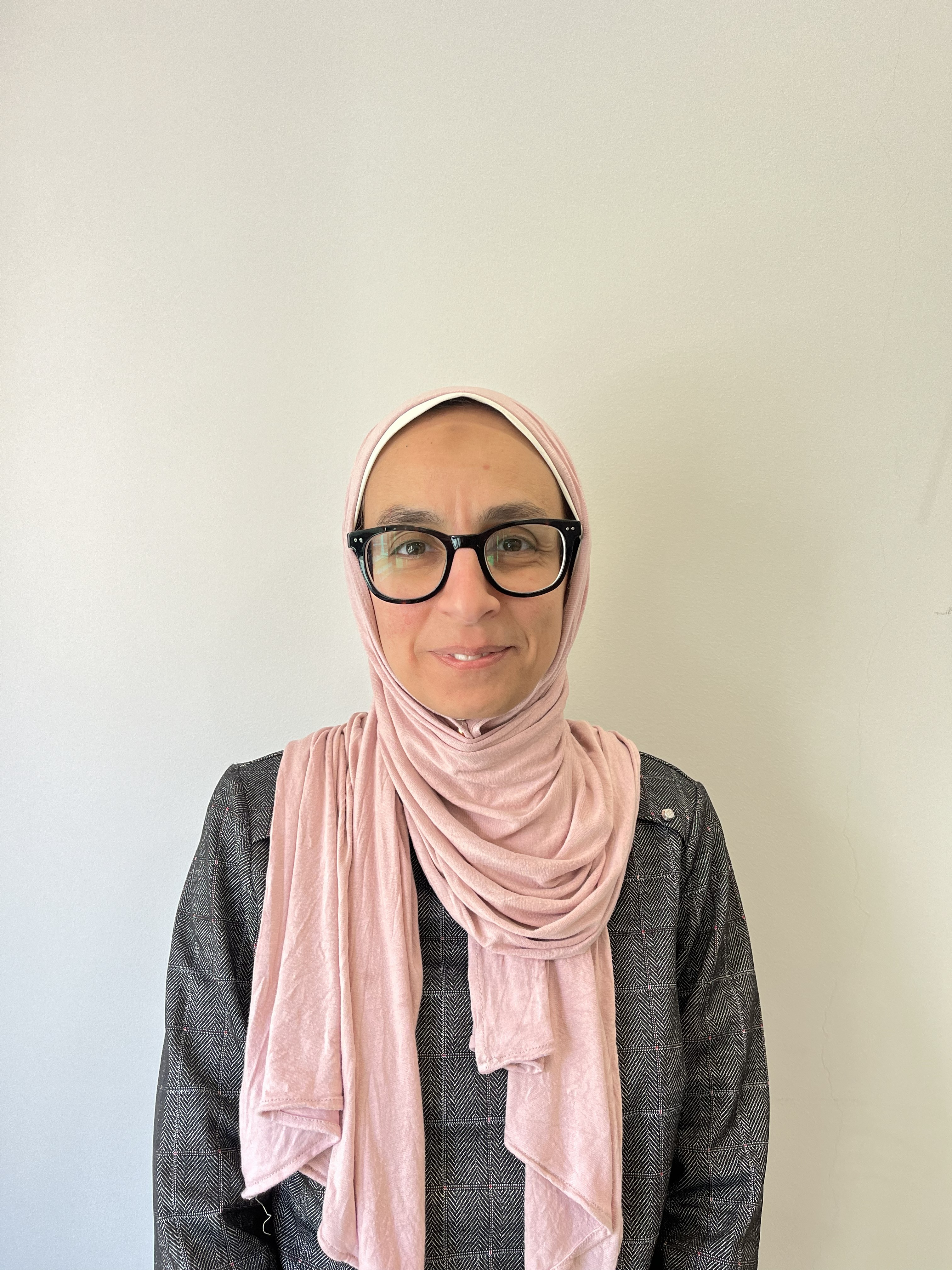
Professor Alaa Abouelfetouh is a pharmacist by training and a Professor of Microbiology and Immunology at the Faculty of Pharmacy, Alexandria University and Alamein International University (AIU). She is PharmD program director and runs the “Next Generation Researcher” program for undergraduate research at AIU.
She was a a bioVision.Nxt fellow (2012), a Fulbright scholar at the lab of Dr. Alan Wolfe at Loyola University Chicago between 2012 and 2013 then conducted a second post-doctoral fellowship at the Medical College of Wisconsin (2013-2014). She was a Newton-Mosharafa fellow at the University of East Anglia (2017-2018) and was a visiting researcher at Helmholtz Institute for Pharmaceutical Research Saarland in 2018. She also received a USAID Graduate Scholarship for Professionals Activity between 2019 and 2020. She is on the editorial board and/or serves as a reviewer for a number of international journals and funding agents. She is a fellow in the Responsible Conduct of Research (the Fogarty International Center JORDAN Program) and currently serves as a Co-Chair of Africa Bioethics Network working group for conference, convening and strategic engagement.
She is the principal investigator of a number of research projects that use genomics to study population structure, virulence and antimicrobial resistance among isolates from LMICs, in order to guide discovery of novel antimicrobial agents. Her latest research project uses language models to design a diagnostic tool for infectious diseases. She also studies the ethical aspects of biomedical research and speaks about research ethical issues in national and international meetings.
Abstract
Antimicrobial resistance (AMR) is a contemporary global public health threat, with roots dating back to the first antibiotic use in clinical practice. It is driven mainly by the overuse and misuse of antimicrobials in human medicine, agriculture, and livestock production. Poor sanitation and inadequate infection control, coupled with insufficient access vaccines and pharmaceutical pollution compound the problem. The consequences are dramatic, including higher mortality, prolonged hospital stays, increasing healthcare costs and economic losses due to lost productivity. Without immediate action, a return to a pre-antibiotic era scenario where patients can’t undergo surgeries or receive chemotherapy is a distinct possibility.
Artificial Intelligence (AI) stands as a game changer. In drug discovery, deep learning algorithms can rapidly navigate chemical libraries to identify novel antibiotic candidates. Furthermore, machine learning models enhance clinical decision-making through rapid, data-driven diagnostic tools that predict resistance profiles, ensuring precise, targeted prescribing. Moreover, AI-driven surveillance systems can integrate global health data to track resistance trends and forecast outbreaks in real time. In doing so, AI allows a pre-emptive action rather than a reactive response.
Governing artificial Intelligence: Ethics, Regulations and Technological Solutions
Dr Sophia Meacham
School of Computer and Engineering, Bournemouth University, UK.
Dr Sophia Meacham is a Principal Academic in Computing at Bournemouth University, where she has worked for the past 12 years. With more than 30 years of experience in the field, she has built a career spanning industry, R&D, and academia. Her research focuses on domain-specific languages (DSLs) for domains such as data science, health, and education, and she consistently publishes work with strong industrial applicability. Sofia has collaborated with partners in telecoms, healthcare, and software engineering, delivering solutions that bridge technical rigor with real-world needs. She also explores the intersection of DSLs and the latest developments in AI, including large language models, positioning her at the forefront of innovation in applied computing.
Abstract
Artificial Intelligence is becoming increasingly embedded in business, healthcare, education, public services, software engineering, and everyday decision-making. Its rapid adoption offers major opportunities for innovation, efficiency, and personalised services. However, it also raises important concerns around transparency, accountability, bias, privacy, safety, and human oversight.
This keynote will discuss the growing need to govern and restrict the use of AI, particularly in high-risk domains where automated decisions may affect people’s rights, opportunities, or wellbeing. It will examine the EU AI Act as a major regulatory development and consider its implications for businesses, developers, researchers, and society.
The talk will also explore the types of practical solutions required to support responsible AI adoption, including risk assessment, documentation, auditability, explainability, compliance monitoring, and governance-by-design. Particular emphasis will be placed on technological approaches that can translate ethical and legal requirements into operational systems.
Finally, the keynote will present domain-specific languages as a promising candidate for AI governance and compliance. By representing rules, obligations, risks, and workflows in a precise and machine-processable form, domain-specific languages can support the development of AI systems that are more transparent, auditable, explainable, and aligned with regulatory expectations.